
When the call comes in, firefighters and EMS Clinicians know what to do. They respond, assess, act, and move toward the chaos while everyone else is moving away, stepping into some of the worst moments of people's lives and doing whatever they can to help. But what happens when the people running toward the emergency are carrying something of their own?
At Norwich Township Fire Department in Hilliard, Ohio, the answer has become part of a broader shift in how the department thinks about taking care of its own people. For Chief Heith Good, that shift is personal. It is also something he has spent much of his career trying to change.
Changing the Conversation
When Good entered the fire service in 1998, the message surrounding mental health was all too familiar. “Suck it up, buttercup,” he recalled. After a pediatric arrest, a house fire, or another difficult call, firefighters were expected to put their emotions aside, get back on the truck, and keep going. Talking about how a call affected you was not part of the job, especially because vulnerability could be mistaken for weakness, leaving you feeling exposed or perceived as less capable.
Good started questioning that mindset early in his career. “I was like, wait a minute, that was terrible, that run that we just went on. We're young kids. How are we dealing with it?” Over time, his colleagues began coming to him when they needed someone to talk to. “Go talk to Goody. He’ll help you out,” they would say.
Good realized he had a natural instinct for listening, but he also knew instinct was not enough. He sought out behavioral health professionals, continued his education, and became a trained peer supporter. What began as one firefighter willing to listen grew into a much larger commitment, both at Norwich Township and through Good’s work advancing peer-support efforts throughout Ohio and across the country.
At the center of that work is the simple idea that firefighters and EMS Clinicians are people first. “We’re just normal people who wear a blue uniform,” Good said. The community often sees the uniform first. It sees the Clinician who arrives when someone is trapped, injured, grieving, or afraid. It sees someone strong enough to step into chaos and, in many cases, calls that individual a hero.
Good understands that admiration, but he also knows what the uniform can sometimes hide. “I look out there, and I see all the firefighters and all the Clinicians and all the police officers,” he said. “The community thinks that we're heroes, but actually, I'm going to leave the firehouse in a little bit. I'm going to put on flip-flops, shorts, and a T-shirt. I'm a normal person.”
That perspective has shaped the way Good approaches peer support. First responders have families, personal struggles, losses, and lives waiting for them when the shift ends. They also spend their days stepping into situations most people will never experience, and the calls do not simply disappear when the apparatus returns to the station.
The Weight That Builds
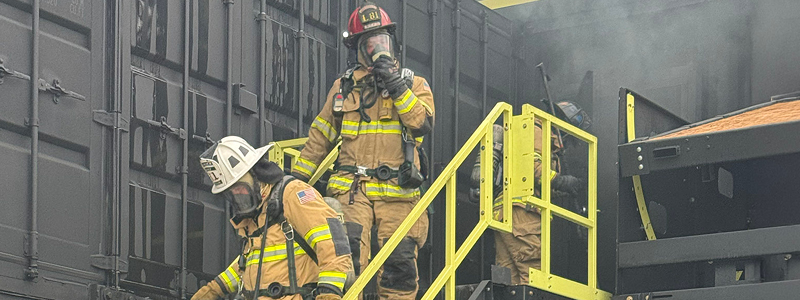
Good does not believe there is always one call that breaks a first responder. More often, it is the accumulation of everything that comes after it. “The calls just stack up,” he said. “It just stacks up, stacks up, one after another.” A line-of-duty death or fatal fire may be followed by another difficult call, while challenges at home, personal loss, or the everyday pressures of life continue to pile on. Over time, what was never fully processed can become a weight that is increasingly difficult to carry.
Good has seen that accumulation through his work supporting first responders during major incidents, including the Surfside condominium collapse, school shootings, and hurricanes. He said the distress responders carry from those events is not always solely about the incident in front of them. Sometimes, the crisis in front of them is simply the thing that brings everything else to the surface. “You have that unresolved grief,” Good said. “That's what was piling up for them.” That is why he wants departments to build systems of support before someone reaches a breaking point. “Start now. Do something,” he said.
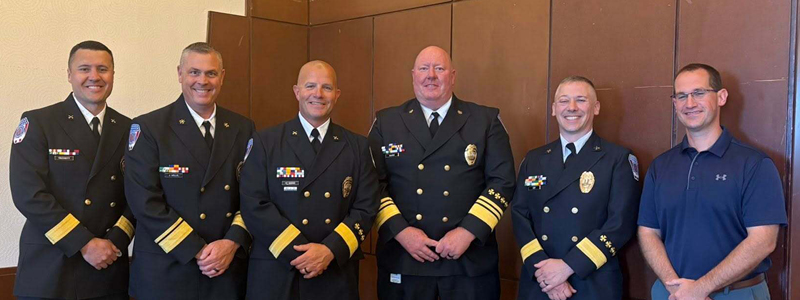
At Norwich Township, peer support is not reserved for the aftermath of a catastrophic event. The department has built a network of firefighters who have completed additional peer-support and behavioral health training and can be there when a colleague needs someone who understands the culture. Good estimates Norwich has roughly 10 trained peer supporters within the department, while three Norwich firefighters also serve on the Ohio Association of Professional Fire Fighters' statewide peer-support team, extending that support beyond their own firehouses.
True to his character, Good is quick to push back on the idea that peer supporters are somehow extraordinary. They are firefighters who signed up for additional training, learned how to listen, and made themselves available when someone needs help. They do not have all the answers, and they are not expected to, but they can show up and remind someone they do not have to face it alone.
It All Starts With Listening
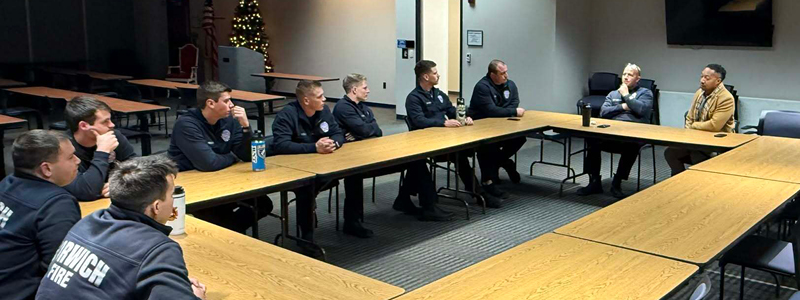
Good is careful about what peer support is and what it is not. He is not a therapist, licensed psychologist, or mental health professional, and he does not pretend to have every answer. “I’m just a person who is willing to listen to people and meet them where they’re at,” he said. When he does not know what someone needs, he helps them find the right support. “If I don't have the answers, I'll find somebody who does,” he said. “I'll sit beside you while you make that phone call.”
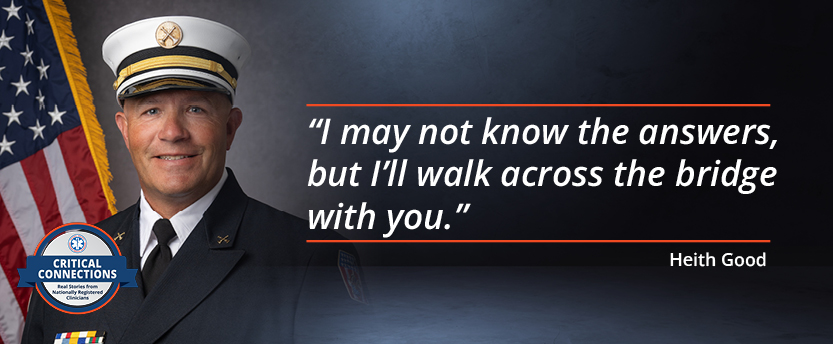
Good often describes peer support as walking across a bridge with someone. The peer supporter may not know exactly what is waiting on the other side, but they do not have to. What matters is that the person does not have to cross it alone. “I may not know the answers, but I'll walk across the bridge with you,” Good said. “Or I'll get down in the hole that you're in.”
Peer support is not about fixing someone or telling them how to solve their problems. It’s about meeting them where they are and helping them figure out what comes next. That might mean connecting someone with a behavioral health professional, sitting beside a colleague through a personal crisis, or simply making a phone call together, and sometimes it begins with a question that can be easy to overlook in the pace of fire and EMS service. “How are you doing?”
Good believes those conversations matter because first responders are so accustomed to taking care of everyone else that they can forget to check on the people standing beside them. “You have no idea,” Good said. “If you're not intentional about asking, ‘How are you doing?’”
The answer may reveal something no one else could see. A first responder may have walked into the station carrying something from home, something from the last call, or something they've carried for much longer. You may not know what someone is facing, but you can make space for them to tell you, and for Good, that is where peer support begins.
Building a Culture of Trust
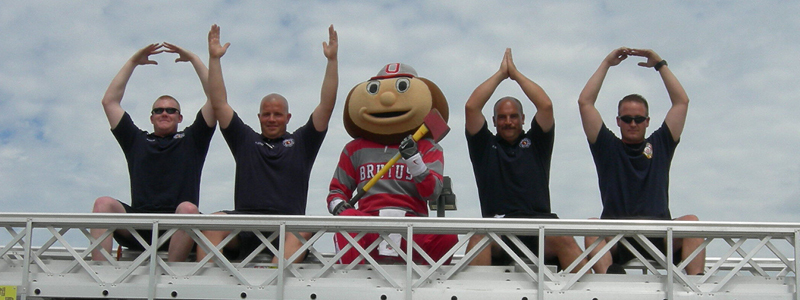
Creating a peer-support program is one thing, but fostering a culture where first responders actually feel comfortable using it is another. Good knows there are still members of the fire service who are uncomfortable talking about mental health. “Norwich is not rainbows and unicorns,” he said with a laugh. “There are still tough people.”
His answer is not to force anyone into a conversation they are not ready to have. “I’m not trying to jam this down anyone's throat,” he said. “I'm just trying to be a friend, really, when they need it.” Sometimes, the people who resist the idea most strongly are the same people who eventually reach out when something in their lives becomes too difficult. “Those are wins for me,” Good said.
That trust is essential. Peer supporters need to be people their colleagues know they can approach without judgment, and they need to understand the importance of confidentiality. Good says the right peer supporter is not necessarily the person with the highest rank or the most years on the job. Often, it is simply the person firefighters already gravitate toward when they need to talk.
Norwich has also taken a broader approach to health and well-being. Members are encouraged to talk with a psychologist annually, and the department has expanded its health physicals to consider overall health rather than simply whether someone is physically capable of doing the job.
For Good, leadership support is critical because culture does not change through a policy or program alone. “If your leadership supports that openness, transparency, vulnerability, and all of those things,” he said, “it allows those people who are at the bottom of your org chart to say, ‘It's okay. My boss is going to support me.’”
That support also shows up in how the department responds after difficult calls. Norwich has become more intentional about recognizing when a crew has experienced a particularly difficult call and determining whether they need a moment before immediately going back into service. “Let's pause for a moment,” Good said. “Let's make sure that this crew is okay before they go in service and take in a whole other run and get exposed to another traumatic event.” Sometimes, taking care of each other means simply knowing when to pause.
Taking Care of the People Who Take Care of Everyone Else
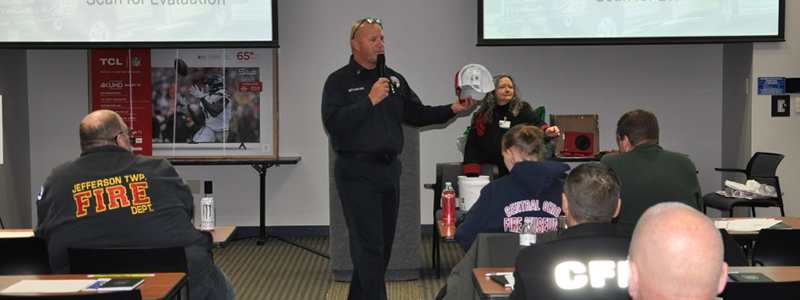
That culture is part of what stood out to Laura Black, Norwich Township's administration assistant, when she interviewed for the role. Black joined the department early in 2026 without a background in fire or EMS. Within a few months, she said she had “happened into this amazing family of people.” She was struck by how closely the firefighters look out for one another and by the department's willingness to talk openly about mental health. “I can’t speak enough about the culture,” Black said.
For Good, that culture is still evolving. He does not claim Norwich has figured everything out, and he is quick to point out that the department did not invent peer support. Departments across the country are doing important work to support the mental health and well-being of their firefighters and EMS Clinicians. He simply feels fortunate to contribute, whether that work happens within Norwich Township, throughout Ohio, or alongside first responders managing major incidents across the country.
What he believes is that the fire service has an obligation to keep moving the conversation forward, particularly for those just entering the profession. Some firefighters begin their careers at 19 or 20, stepping into a profession that asks them to carry experiences far beyond the ordinary. Good wants them to understand from the beginning that strength does not require silence, and that asking for help does not make someone less of a firefighter or Clinician.
He is equally passionate about ensuring professional help is available when needed, particularly from Clinicians who understand the culture they serve. There is a difference between telling someone to talk about an experience and understanding what that experience can mean to someone who lives this job. Good believes first responders deserve access to professionals who understand the realities of fire, EMS, and law enforcement, including the culture, the language, and the experiences that can be difficult to explain to someone outside of it.
The Strength to Ask for Help
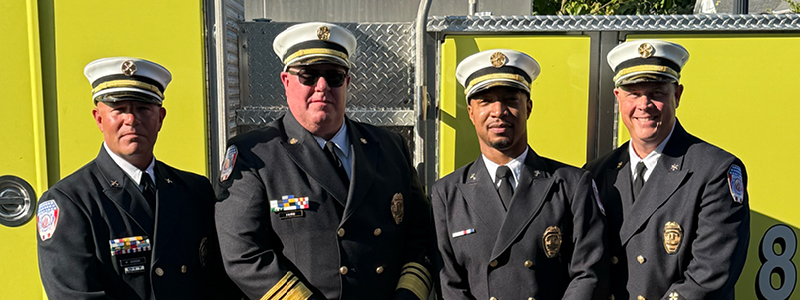
Ultimately, Good keeps coming back to something much simpler. “There’s nothing more important in the fire service right now than how we take care of each other,” he said. “Nothing.” At the end of a shift, when the gear comes off and the uniform gets hung up, Good goes home and returns to his life as a husband and father. “I love my job, and I love everything that's done,” he said. “But I'm a husband, and I'm a dad. That's my job.”
That is perhaps the heart of what Good wants the fire service to remember. Taking care of firefighters and EMS Clinicians is not about making them softer. It is about making sure they have somewhere to turn when the job starts to take a toll. Strength does not require silence, vulnerability does not erase courage, and needing help does not diminish someone’s ability to care for others.
Sometimes, the person who needs help does not need someone to fix them or tell them what to do. They just need someone willing to be there, listen without judgment, help them find the next step, and make the call if they need more support. For Good, that is what peer support really means. You may not know how someone’s story will unfold or what they will find on the other side, but you can choose to walk beside them as they make their way there.
About the National Registry of Emergency Medical Technicians
Guided by our mission to support the EMS profession through partnerships, research, and lifelong assessment of clinical competence, the National Registry was established in 1970 as a non-profit organization and serves as the Nation’s Emergency Medical Services certification organization. It is accredited by the National Commission for Certifying Agencies (NCCA), the accreditation body of the Institute for Credentialing Excellence. The National Registry maintains NCCA accreditation for each of the four certification programs: Emergency Medical Responder (NREMR), Emergency Medical Technician (NREMT), Advanced Emergency Medical Technician (NRAEMT), and Paramedic (NRP). Credentialing protects the public, assures consumers that Clinicians have met standards of practice, advances the EMS profession, and establishes standards of professional knowledge, skills, and practice. Additional information is available at NREMT.org, and BlueSky, TikTok, Facebook, Instagram, LinkedIn, Reddit, and YouTube.
Media Contact:
Kelly Schroeder
Manager of Integrated Content & Communications
kschroeder@nremt.org